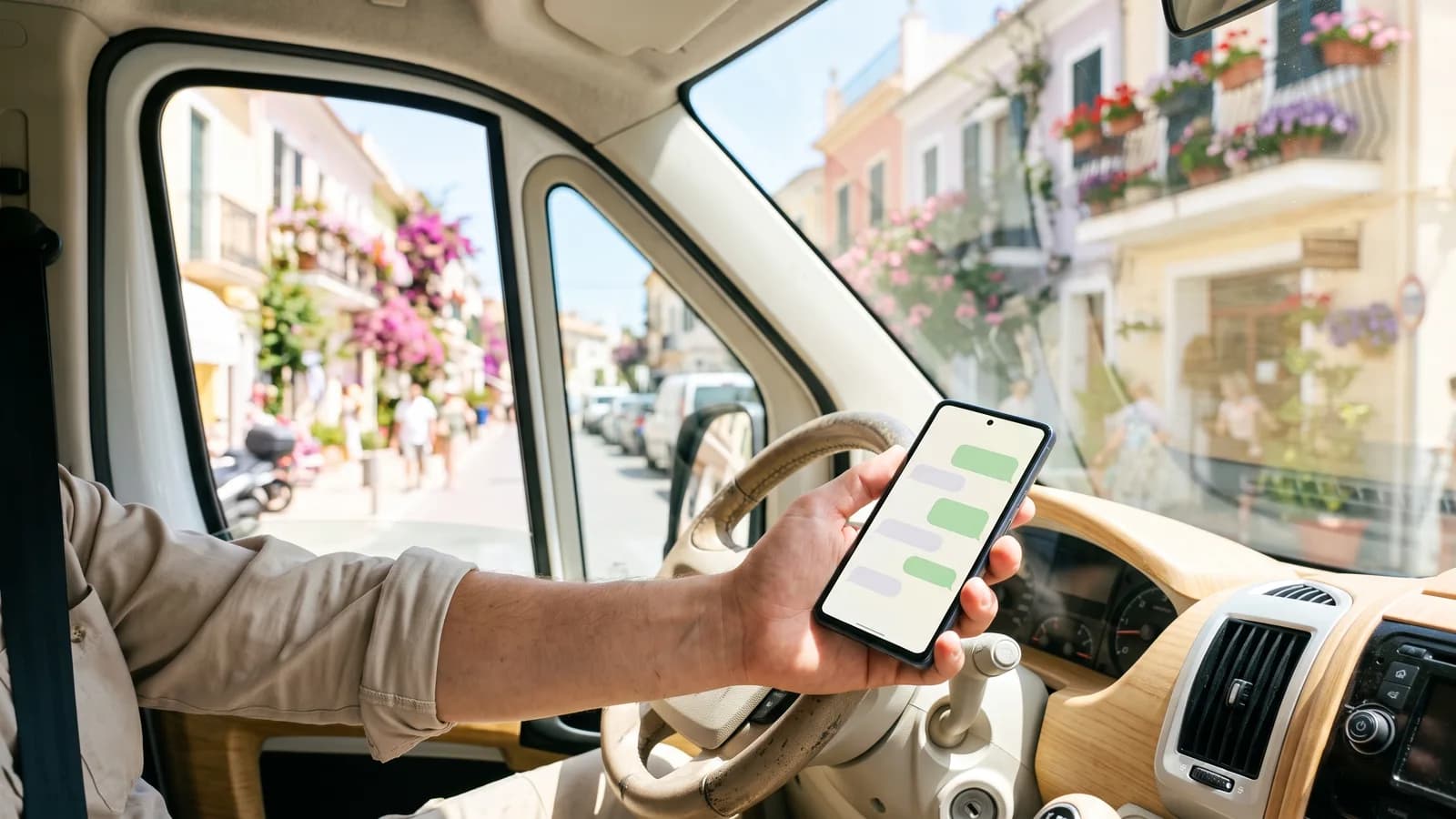
The first WhatsApp message to a lead: what to write
The first message should do three things in four lines: say who you are and why you are writing, reflect back two specific details the person just gave in the quiz, and propose one closed action (two time slots to pick from). No empty greetings and no re-asking what they already answered — that is what turns a speed advantage into a dead conversation.
The quiz has done its job: the person owns the property, has a timeline and a budget, and their answers are on your phone. Everything now rests on one message — and most messages of this kind are wasted.
Why WhatsApp rather than email
The figures circulating about WhatsApp are spectacular — 95-98% open rates against 18-25% for email, 15-35% click-through against 2-5% — but it is worth saying where they come from: they are published by messaging platforms that make their living from the channel. Treat them as orders of magnitude, not laboratory results.
What is hard to argue with is the mechanism: WhatsApp is a personal app people open dozens of times a day, while a commercial email competes with fifty others. That fits what we already know about the first-minutes window.
The structure that works
Four lines, three jobs. Not shorter (reads as spam), not longer (does not get read).
- Who you are and why you are writing, in one line: «This is Marta from Delta Renovations. You just estimated your kitchen on our site.»
- Two of their own details, reflected back verbatim: «You said around 12 m² and that you want to start in September.» This proves a person read it, not an automation.
- One closed action: «Shall I call tomorrow at 10:00, or would 17:00 suit you better?» Two concrete options can be answered with one tap; «when suits you?» demands thought and goes unanswered.
- Nothing else. No attachments, no catalogue, no three follow-up questions.
What kills the conversation
- Empty greetings: «Hi, how are you? Is now a good time?» spends the message without delivering anything.
- Re-asking what they already answered in the quiz. It is the fastest way to cancel the advantage screening gave you.
- Obviously automated templates, heavy on capitals and emoji. If it looks like a bulk send, it gets treated like one.
- Asking for budget in the first message when you already have it. It signals that nobody read anything.
The legal bit, in two sentences
You are writing because the person left their number so you would contact them about that service: that is your declared purpose, and it pays to stay inside it. Using those numbers later for promotions is a different thing and needs separate consent — the full reasoning is in the GDPR guide. WhatsApp Business also has its own rules for business-initiated messages: check them before automating sends.
What to measure
Two numbers are enough: how long you take to send the first message, and what share of them get a reply. If the second is low while the first is fast, the problem is the wording, not the channel.